Engaging a Diverse Workforce - How You Can Help Your Employees Thrive
Authors
According to the American Psychological Association's Work in America Survey, 77% of workers reported experiencing work-related stress in the past month, and 57% said it led to negative impacts such as emotional exhaustion and a lack of motivation to do their best. [1]
Employees are more stressed than ever, which can impact their work life. Sixty-two percent of employee's report being disengaged, which is an annual global productivity loss of $8.8 trillion.[2] This stress is where employers can step in to help their employees with their concerns. Every workforce is different, with a diverse set of needs. The US labor force is progressively becoming more diverse. Nearly half of employees are women, more than 20 percent are non-white, and nearly 10 percent of adults identify as LGBTQ+.[3] [4] [5]. All these numbers are dramatically up from the last several decades. That is why the first and most crucial step is understanding your employees and what they need most.
This article will outline some DEI & B initiatives that you can take to set all your employees up for success, regardless of their diverse backgrounds with the ultimate goal for all employees to thrive and not just survive. Below is a discussion of strategies to consider implementing within your employee benefits plan to help account for the growing, diverse workforce.
Understanding Your Employees
There are many ways to understand your people, but it starts with seeing them as more than employees - recognizing them as individuals with unique experiences, priorities, and challenges. While demographics provide useful context, an employee's life stage is often a stronger predictor of both the obstacles they face and the types of benefits and support that will resonate most.
Life stage also significantly influences how employees perceive the value of their benefits. Findings from OneDigital's Employee Value Perception Study, which surveyed thousands of working individuals, highlight this distinction: employees with young families identified workplace flexibility as the primary driver of happiness, while single employees over age 45 placed the greatest importance on having meaningful work.
A diverse workforce lays the foundation for employees flourishing, thoughtful employee interactions, and company success. Companies that do not embrace a diverse workforce are not only missing out on the diversity of thought and attracting and retaining top talent but there is a financial cost as well. The U.S. Equal Employment Opportunity Commission (EEOC) found that workplace discrimination and unfair treatment cost U.S. employers a record-breaking $700 million, and that number is growing.[6] Companies must actively work to attract and then retain a diverse workforce to stay competitive. Many employers, however, are unsure what that means and how to move forward. Here are three ways to ensure your employees thrive in a diverse workforce:
- Consciously Recruit for Diversity – Employers should review their recruiting strategy and update to actively seek diversity. Diversity recruiting strategies include reviewing job descriptions to ensure the language is inclusive, expanding sourcing efforts to reach underrepresented groups, and creating a welcoming culture. Additionally, hiring managers should be trained to recognize unconscious bias and focus on skills and qualifications.
- Understand Who Your Employees Are – Employers need to know the diverse make-up of their workforce and recognize that one size doesn’t fit all when it comes to employee benefits and that each employee has unique needs and preferences. For example, some employees may prioritize health benefits such as medical, dental, and vision insurance, while others may place more value on retirement benefits such as 401(k) plans and stock options. Drilling down even further into each benefit to meet the needs of your employees will greatly enhance the offerings.
- Evaluate Your Programs – Having diversity programs alone isn’t enough. To help ensure your programs are working and employees are thriving, companies must evaluate the effectiveness of these programs. Evaluation of diversity programs can provide valuable insights into whether the program is achieving its objectives, such as increasing the representation of underrepresented groups, supporting employee’s health and financial goals, reducing turnover rates, or improving employee morale. It can also help identify areas for improvement and inform future program design.
Customized Employee Benefits
The traditional one-size-fits-all approach to employee benefits fails to solve the nuanced and diverse needs of employees, yielding both low enrollment and engagement. The workforce and cultural shifts seen in recent years have brought employee values and needs to the forefront. Personalization and flexibility are among the most-requested features in benefit offerings today. [7] [8]
To truly support employee wellbeing across all demographics and drive organizational growth, employers should consider surveying their people to understand employee value drivers and offer benefits that are tailored to meet the unique needs of each individual. By providing benefits that cater to each individual's preferences, forward-thinking companies can demonstrate a commitment to understanding and valuing employees from all socioeconomic statuses, generations, and backgrounds. Here are two benefits that will both drive your DEI&B efforts and engage your people:
- Custom Lifestyle Benefits - In recent research performed by Forma, Lifestyle Spending Accounts ranked among the most valued and fastest-growing employee benefit across all industries and demographics. [9] Custom lifestyle benefits can help foster a thriving and engaged workplace by providing employees with the curated health and wellbeing resources they crave. In addition, these benefits can help to improve retention efforts by enhancing your employee value proposition and promoting workforce diversity via individual choice and customization.
- Accessible Mental Health Support – There has been remarkable progress in dismantling the mental health stigma over the past few years, and employees are eager to take advantage of employer-provided mental health resources when they are available and accessible. Though embedded EAPs are available to employees, utilization remains consistently low, averaging below 10%, with employers across industries actively seeking ways to improve awareness and usage, according to SHRM. [10] Trends indicate that many employers are combatting this mental healthcare disparity by implementing more comprehensive, third-party solutions, witnessing improvements in engagement compared to an embedded EAP. Spring Health reports that modern mental health solutions achieve engagement rates often 10 times higher than the traditional EAP average of 2-5%.[11]
When implementing these sorts of changes, it's important to understand the unique lifestyle needs of your people and work to gather feedback on what benefits would be most impactful to them. This feedback will enable you to select the most suitable options for your workforce and provide employees with the best possible experience, both professionally and personally.
Gaps in Retirement Savings
Retirement savings and financial health can significantly impact an employee’s mental wellbeing. Employees who are more prepared for their future are more likely to have a positive work experience. There is a savings gap for many employees. Around 1 out of 3 non-white households are not participating in a retirement plan whatsoever, compared to only 1 out of 6 white households.[12]
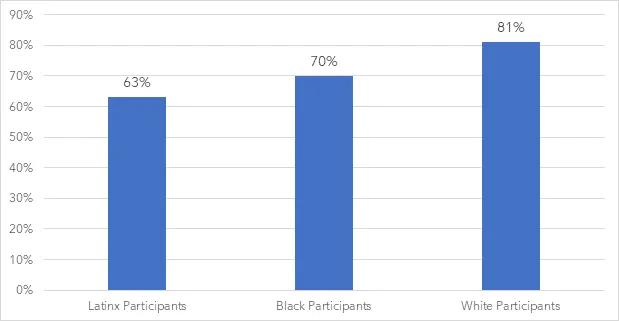
There is also a disparity between LGBTQ and Non-LGBTQ savings rates. A report found that nearly half of LGBTQ+ adults feel less financially confident which is double the rate of the general public, leaving retirement security far out of reach for many. [14] Another staggering difference also exists between those that identify as men and women, with 84% of men feeling secure about their retirement savings compared to only 73% of women, and men's average 401(k) balance being 50% higher than women's overall. [14] . It is essential for employers to empower women to make the best long-term saving decisions for themselves and their families.
Employees are struggling to save. That is why we need to anticipate their needs and implement programs to help them save for retirement. Here are a few steps that you can take to help engage with your diverse workforce and help your employees save from a retirement plan perspective.
Implement Auto Features Like Automatic Enrollment and Escalation
These automatic features are tried and true methods of helping employees start saving and increase their percentage saved each year because they happen automatically for the employee. Vanguard's latest data shows these features work with 45% of participants increasing their savings rate, a record high, largely driven by automatic escalation.[15]
Have a Customized Financial Wellness Platform
A wellness program with both group and one-on-one education opportunities will help your employees gain the financial literacy they need.
Offer an Employer Match
An employer match can incentivize your employee to save.
Engaging Your Workforce
It’s vitally important to have an engaged workforce. As we continue to grow in diversity, we as employers must continue to be ahead of the curve regarding employee benefits and understanding our employees to help them with their goals. As an organizational goal, it is essential to show that you are putting your best foot forward and implementing strategies at an employer level.
For more insights into what's top of mind for employees and how to prioritize investments that resonate, read OneDigital's Employee Value Perception Study
Investment advice offered through OneDigital Investment Advisors LLC. This material has been prepared for informational purposes only. It is not applicable to any person or organization's individual circumstances. You should consult your own qualified advisors before engaging in any transaction. Additionally, any statements made reflect our views and are not intended to guarantee any particular result.
Some information has been obtained by sources we believe to be reliable. OneDigital Investment Advisors LLC makes no representations as to the accuracy or validity of this information. ID: 0527078
Sources:
[1] Forbes: Stress Statistics and Facts
[2] PLANADVISER: Stress and Burnout Causing Lost Workplace Productivity
[3] Department of Labor Statistics: The Employment Situation - February 2026
[4] U.S. Bureau of Labor Statistics: Labor Force Characteristics by Race and Ethnicity, 2023
[5] Gallup: LGBTQ+ Identification in U.S. Rises to 9.3%
[6] U.S. Equal Employment Opportunity Commission: 2024 Annual Performance Report
[7] Insurance NewsNet: Gen Z Setting the Tone for a New Standard of Benefits Engagement
[8] ADP: Employee Benefits Trends in 2025
[10] SHRM: Companies Seek to Boost Low Usage of Employee Assistance Programs
[11] Spring Health: Beyond EAPs: Your Guide to a New Mental Health Approach in 2026
[12] Dayforce: Dayforce Report Uncovers America's Growing Retirement Divide