Blog Article
AI in HR: What's Real

AI Hub for Employers
Every workforce shift needs a people leader to own it. This one is waiting for you.
Are you leading it, or cleaning up after it?
Blog Article
Blog Article

Blog Article
Blog Article
Blog Article
Blog Article
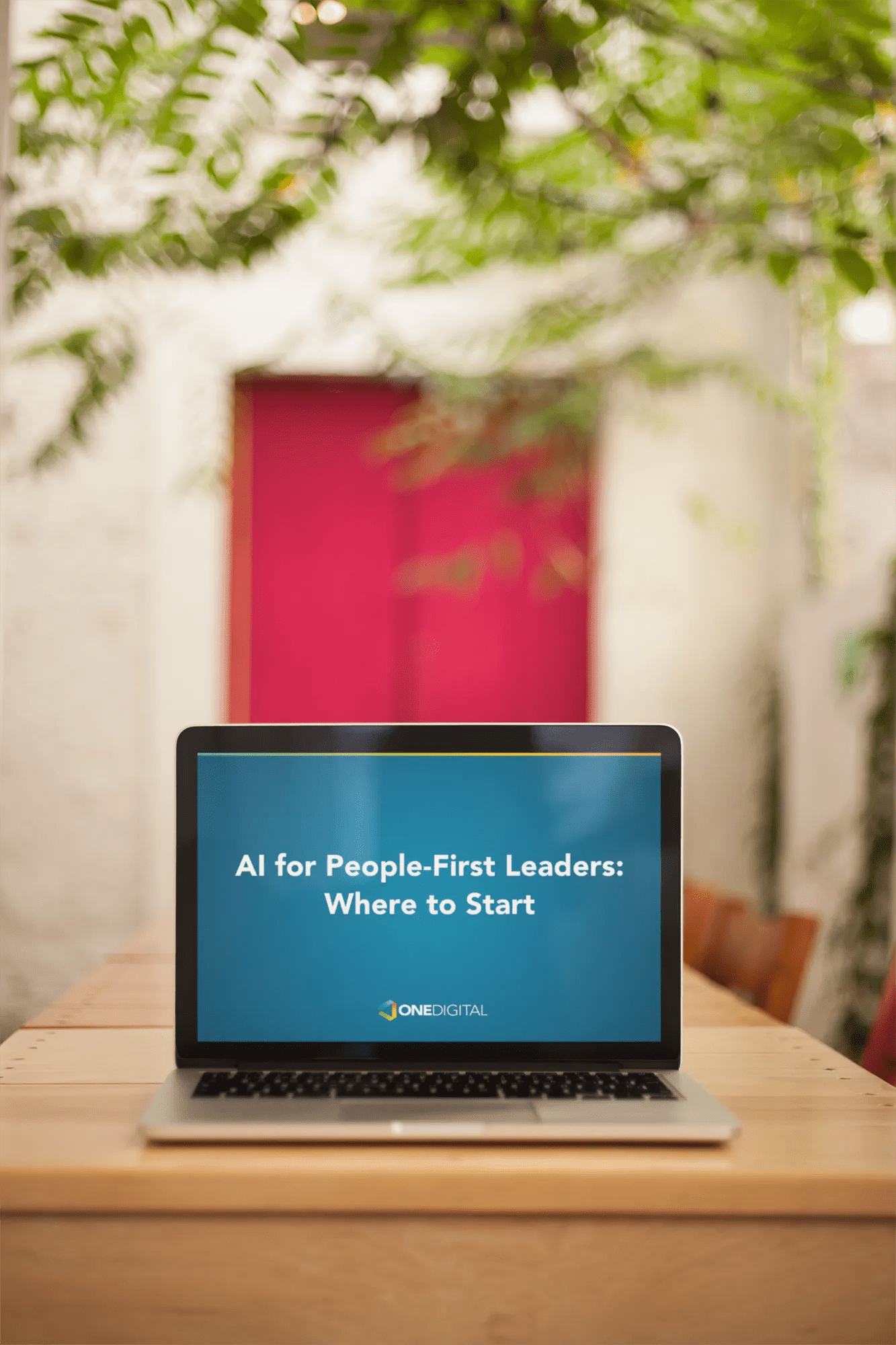
Upcoming Digital Event
Join OneDigital’s HR consulting experts for a practical conversation on what AI transformation really requires—and how leading organizations are getting it right. No hype, just where to start and what to prioritize.
Tuesday, April 28, 2pm ET
Register to attend live or receive the recording.
AI can boost productivity, but outcomes depend on how you prepare and support your workforce.
2.5x
Organizations investing in upskilling and reskilling are 2.5 times more likely to achieve positive AI outcomes.Technology alone doesn’t drive results—how you equip and enable your people does. Organizations that prioritize skill-building, manager readiness, and workforce adoption are better positioned to turn AI investments into meaningful business impact.
21%
Only 21% of companies have redesigned workflows to capture value from AI.At the same time, many organizations are still building readiness for employees to work effectively alongside AI—creating an opportunity to lead with a stronger people strategy.
Experience as our Credential
That firsthand experience now helps organizations accelerate their AI workforce strategy with clarity, speed, and confidence. Many organizations are not starting from zero. They are starting from scattered tools, isolated pilots, and employees using AI without direction. OneDigital helps turn that activity into a unified, forward‑looking strategy.
You do not need every answer to begin. You need a clear starting point and a partner who has done this successfully at scale.
Start with a mini‑consult.

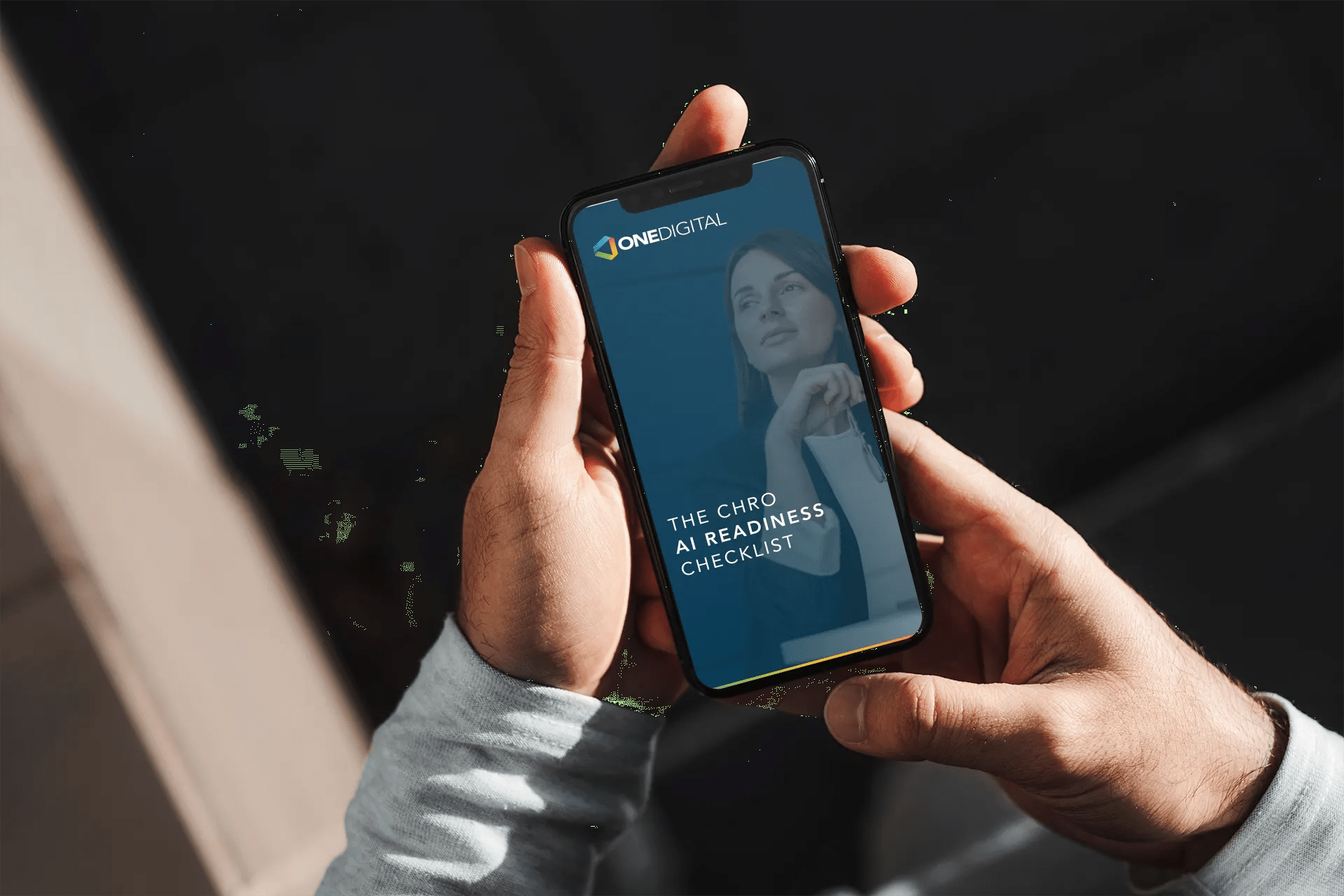
DOWNLOADABLE RESOURCE
AI is creating real-world risks today: bias in hiring, privacy concerns, and high-stakes decisions without human oversight. Many small and mid-sized businesses still lack an AI strategy or acceptable use policy. This is a governance responsibility, guided by the leaders who oversee how people are supported and evaluated in your organization.
Use this checklist to manage AI responsibly—whether you’re just starting or refining your approach.






Most AI workforce initiatives don't fail because of bad technology; they fail because of unclear communication, misaligned expectations, and employees who feel left behind. This FAQ is designed to close those gaps: giving executives the framework they need to lead decisively, and giving employees the honest answers they deserve.
At its core, AI in the workplace means using software that can learn from data, recognize patterns, and make recommendations or decisions, without needing a human to program every step. Think of it this way: AI is already helping colleagues write job postings faster, flag a benefits plan that isn't being used, or predict which employees may be at risk of burnout. It's a tool, a very powerful one, and like any tool, its value depends entirely on how thoughtfully it's used.
An AI-ready organization doesn't have the most technology; it has the most clarity. Leaders know which problems they're trying to solve, employees understand how AI affects their work, and governance structures are in place before issues arise. AI-ready organizations share four traits:
» Executive Insight: The #1 barrier to AI adoption isn't technology, it's trust. Organizations that communicate clearly before, during, and after AI deployment see 2x faster adoption rates.
Fear about AI is almost always a communication gap, not a technology gap. Employees don't resist AI; they resist uncertainty. Your communication strategy should answer three questions every employee is silently asking:
Best practices for executives rolling out AI initiatives:
Before approving any AI workforce initiative, CFOs should demand answers to five financial clarity questions:
Without these answers, an AI investment is a budget request, not a business case.
» CFO Framework: Target a 12–18 month payback period for operational AI tools (recruiting, scheduling, benefits admin). Strategic AI investments, predictive analytics, and workforce planning may warrant a 24–36 month horizon.
Role clarity is one of the most overlooked aspects of AI transformation. When AI handles the transactional, data entry, scheduling, and routine reporting, what remains must be redefined, not just redistributed.
A practical approach:
This is not just an HR exercise. Executives need to sponsor it, and Finance needs to fund the transition.
This is the most asked question, and it deserves a straight answer. AI will automate specific tasks, not entire roles. Jobs that consist mostly of repetitive, rule-based tasks will change significantly. But most roles will evolve rather than disappear, and many new roles will be created that don't exist today.
What this means for you:
Transparency is a right, not a privilege. Employees should know when AI tools are involved in decisions that affect their employment, including hiring screens, performance assessments, promotion eligibility, or benefits recommendations. What responsible AI governance looks like from an employee's perspective:
If your organization doesn't yet have these standards, this is an important conversation to start with your HR team.
AI literacy doesn't mean becoming a data scientist. It means understanding enough about how AI tools work to use them confidently in your role. Start with three practical steps:
Remember: the goal isn't to master AI. The goal is to stay curious and adaptable.
Governance isn't bureaucracy, it's protection. For employees, it ensures fairness. For executives, it reduces legal and reputational risk. Every organization deploying AI in HR functions should establish:
» Compliance Watch: New York City's Local Law 144, the EU AI Act, and emerging U.S. federal AI guidance are creating a fast-moving regulatory environment. Your policies need to be living documents.
Clarity before complexity. Here's where to start:
OneDigital's workforce strategy consultants partner with HR leaders and CFOs to build AI roadmaps that are practical, compliant, and built around your people.