AI as Talent, Not Technology: A New Framework for Adoption
Authors
Article Summary
Why do most enterprise AI rollouts stall at 15–20% adoption? This article argues AI needs to be managed as talent, not deployed as technology — and shows how OneDigital reached 85.5% adoption by doing exactly that.
What Do Companies Like Service Now and Moderna Have in Common on AI?
Most companies are running their AI rollout through the same playbook they used for their last enterprise software launch: a vendor review, a procurement cycle, a training module, a company-wide announcement email, and a dashboard to track usage. It's the same sequence that worked for a CRM or an ERP system.
It doesn't work for AI, and the adoption numbers show it.
Why Does Enterprise AI Adoption Stall at 15–20%?
Enterprise AI rollouts follow a familiar arc: a fast initial spike in usage, followed by a plateau, typically somewhere between 15 and 20 percent of the eligible workforce, that persists no matter how much additional training or communication follows. Industry analysts have traced the cause directly to how the rollout was framed:
Enterprise organizations tend to treat AI adoption as a standard software deployment rather than the larger behavior change it actually requires.
That framing problem is structural, not tactical. A CRM stores data. An ERP processes transactions. Those tools don't need a relationship — they need a login and a training video. AI is different. It reasons, it holds context across a conversation, and it adjusts its answer when you push back. The experience of working with it has more in common with onboarding a new colleague than installing a new tool. Run the standard IT playbook on something that behaves like a colleague, and adoption stalls exactly where the data says it does.
What Do Companies Like Service Now and Moderna Have in Common on AI?
Independent research from HR analyst Josh Bersin has identified a pattern among some of the most sophisticated organizations in the world: companies including Seagate, Moderna, and Service Now have all moved responsibility for enterprise AI adoption to their Chief People or HR Officer, rather than leaving it with IT.
If AI adoption depends on how people change their habits — not on how well a platform integrates with the tech stack — the people function is best equipped to drive it, not the technology function.
What Does It Actually Look Like When AI Adoption Works?
The clearest evidence isn't a usage dashboard — it's how people talk about the AI once it's genuinely part of the team.
| Case Study: OneDigital's AI Coworker Program |
OneDigital built its own coworker program by pairing individual AI coworkers with the human experts who supervise and train them, starting with an employee benefits specialist named Ben. Ben doesn't run generic prompts. He was built and is actively supervised by Shelley McLean, a OneDigital benefits consultant with three decades of experience, who trained him to carry her specific expertise, standards, and judgment into every consultation across the firm.
When Ben went offline briefly, OneDigital consultants across the country noticed. They reached out to Shelley the way they'd check on a colleague who called in sick: Is Ben okay?
That reaction is the tell. Nobody asks if a piece of software is "okay." People ask that about teammates. It's a small moment, but it's the clearest signal available that an organization has crossed the line from deploying a tool to managing talent, and it's a large part of why OneDigital's own weekly adoption rate reached 85.5 percent, well above the 15–20 percent industry norm, within months of launching its coworker program. |
|---|
What Should Leaders Do Differently, Starting Now?
The shift starts with a single reframe: stop asking "how do we roll this out" and start asking "how do we hire, train, and manage this." In practice, that means:
- Write a real job description for each AI deployment, defining the specific role it plays and the expertise it needs to carry
- Assign a human supervisor who is accountable for the AI's quality, accuracy, and growth over time
- Build an ongoing coaching relationship — the same kind you'd expect between a manager and a new hire — rather than a one-time training session and a usage dashboard
The organizations getting this right aren't waiting for IT to finish a procurement cycle. They're treating AI deployments the way they'd treat any new team member: with a clear role, a named owner, and an expectation the relationship will develop over time.
How Do You Build an AI Coworker Program at Your Company?
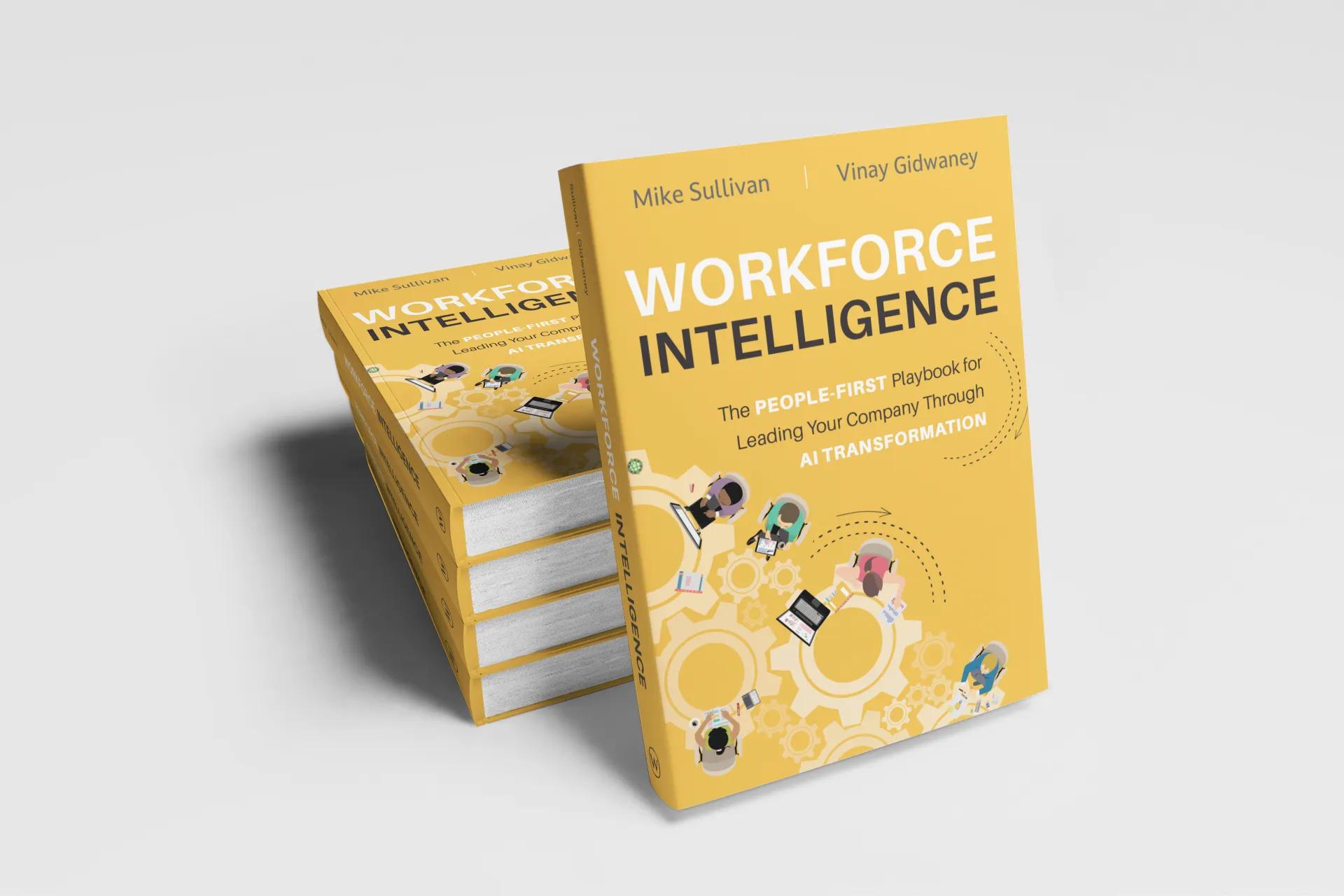
This reframe — AI as talent, not technology — is the foundation of OneDigital's new book, Workforce Intelligence: The People-First Playbook for Leading Your Company Through AI Transformation, from Mike Sullivan and Vinay Gidwaney. It goes deeper into what a real AI coworker program looks like in practice, including how to write the job description, choose a supervisor, and manage the relationship as it matures.
Visit the Workforce Intelligence page to learn more about the book and connect with a OneDigital advisor about what this looks like for your organization.