
Virtual Event
On-Demand Webinar
What AI Changes First: A People-First Playbook for Leading Your Organization Through AI Transformation

Workforce Intelligence: The People-First Playbook for Leading Your Company Through AI Transformation.
AI HUB
From HR strategy to benefits cost containment to risk management, AI is reshaping every decision leaders make — and the right playbook depends on your organization's specifics. Connect with a OneDigital expert to build yours.


Where AI Meets Your Business
Employee Benefits
AI is changing who you hire and what roles need. Most benefits plans haven't caught up.
AI is changing who you hire and what roles need. Most benefits plans haven't caught up.Get a 45-minute workforce alignment read before your renewal locks in.
HR Consulting
Adoption isn't the same as productivity, and automated decisions carry compliance risk most miss.
Adoption isn't the same as productivity, and automated decisions carry compliance risk most miss. Find out if your workforce is actually more productive with AI, not just busier.

Commercial Insurance & Risk
A policy tells you what’s covered. It doesn't account for how AI is reshaping your risk exposure.
A policy tells you what’s covered. It doesn't account for how AI is reshaping your risk exposure. Pressure-test your total risk investment with a risk readiness assessment.

Human Capital Management
Small teams are adopting AI faster than they can build policy, compliance, and structure around it.
Small teams are adopting AI faster than they can build policy, compliance, and structure around it. Let a PEO carry the people side while you capture the productivity gains.

Virtual Event
On-Demand Webinar
Blog Article

Blog Article
Blog Article
Blog Article
Blog Article
91%
of CHROs name AI their #1 immediate concernIf your HR team hasn't built an AI strategy yet, you're already behind most peers. OneDigital gives HR leaders a clear, practical starting point to close it.
80%
of CEOs expect AI to force operational changeThe shift is already underway at the top. OneDigital helps CEOs translate that pressure into a workforce and benefits strategy that keeps pace with the business.
84%
of CFOs haven't seen ROI on AI yetAI spend without a clear read on impact is a common — and costly — pattern. OneDigital's framework helps CFOs see whether AI is actually driving productivity, or just generating more activity.
77%
of small businesses have no written AI policyUsing AI without oversight opens the door to data exposure and shadow IT most small businesses aren't tracking. OneDigital helps owners put real guardrails in place before a gap becomes a breach.
Experience as our credential
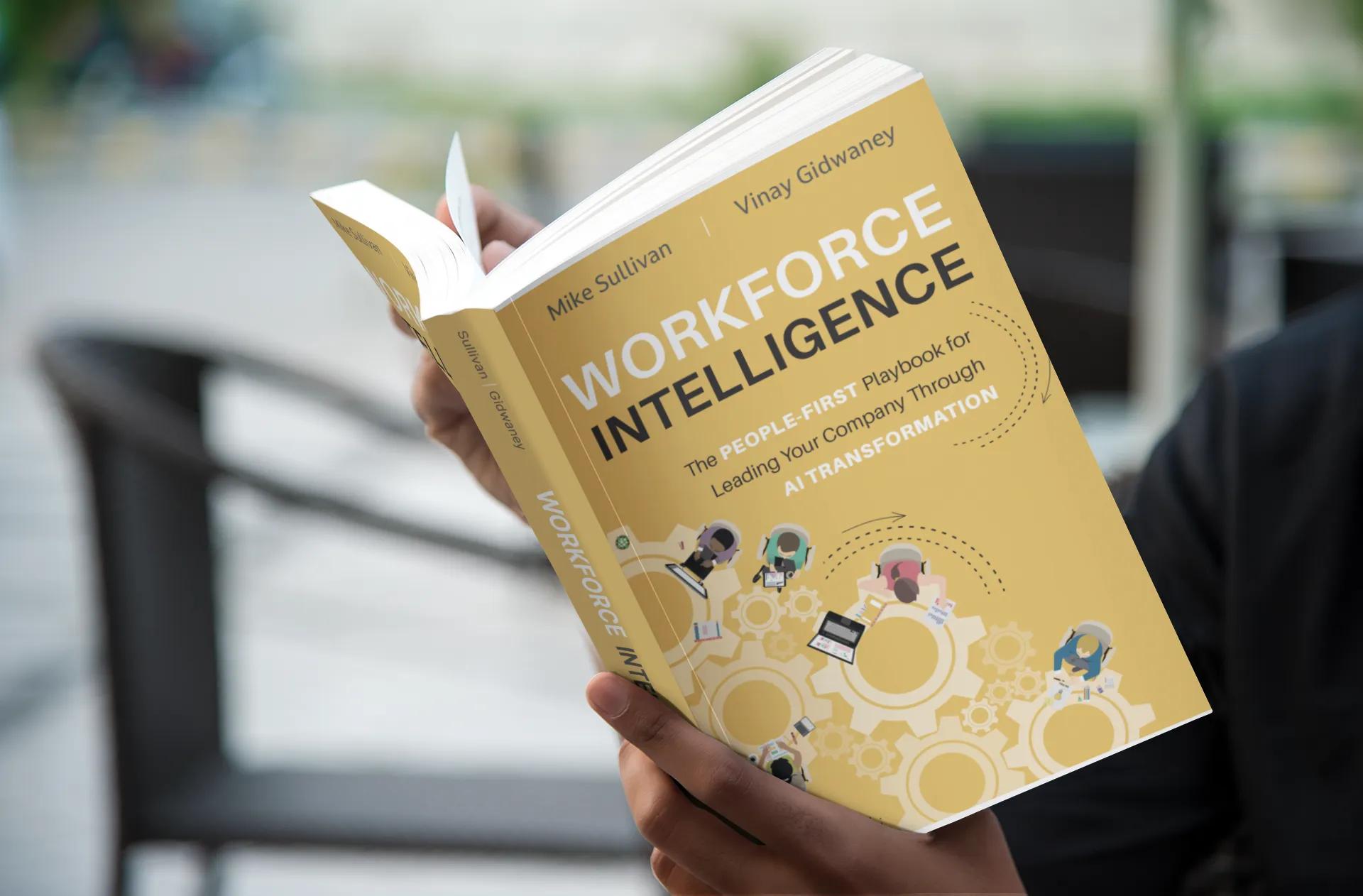
OneDigital is one of the most AI-advanced businesses in our industry — independently recognized by Harvard, Forbes, and other academic and business press as a model for how large organizations should approach AI transformation. That story is now a book: Workforce Intelligence, written by OneDigital's own Mike Sullivan and Vinay Gidwaney, which uses our 6,000-person firm as its central case study.

From how we use AI internally to what it means for your business, here's what people ask us most about AI, insurance, benefits, and HR consulting.
Yes. AI runs through OneDigital internally across nearly every part of the business, and it's built directly into the technology platform we use with clients. Impact Studio, our client-facing platform, runs on a continuous AI layer rather than a one-time analysis, so the intelligence behind it keeps working long after a plan is set.
More than 65% of OneDigital's workforce actively uses AI in daily work, a strategy that spans nearly every part of our enterprise, not a single department's initiative.
In HR, automation has taken over scheduling and administrative work in hiring and performance reviews, giving our people more time for the parts of the process that actually require a human, while keeping our high-touch culture intact. Learn more here.
In marketing, AI-enabled workflows give our teams some of the most sophisticated tools in the industry to support client outreach and producer needs faster, without losing the judgment behind them.
In sales and service, a team of 20+ AI Coworkers supports our teams' research and analysis, so the people our clients work with can spend more of their time on relationships and problem-solving. Learn more about our coworkers here.
And that's just the start. We treat our own operations as the proving ground for what we bring to clients.
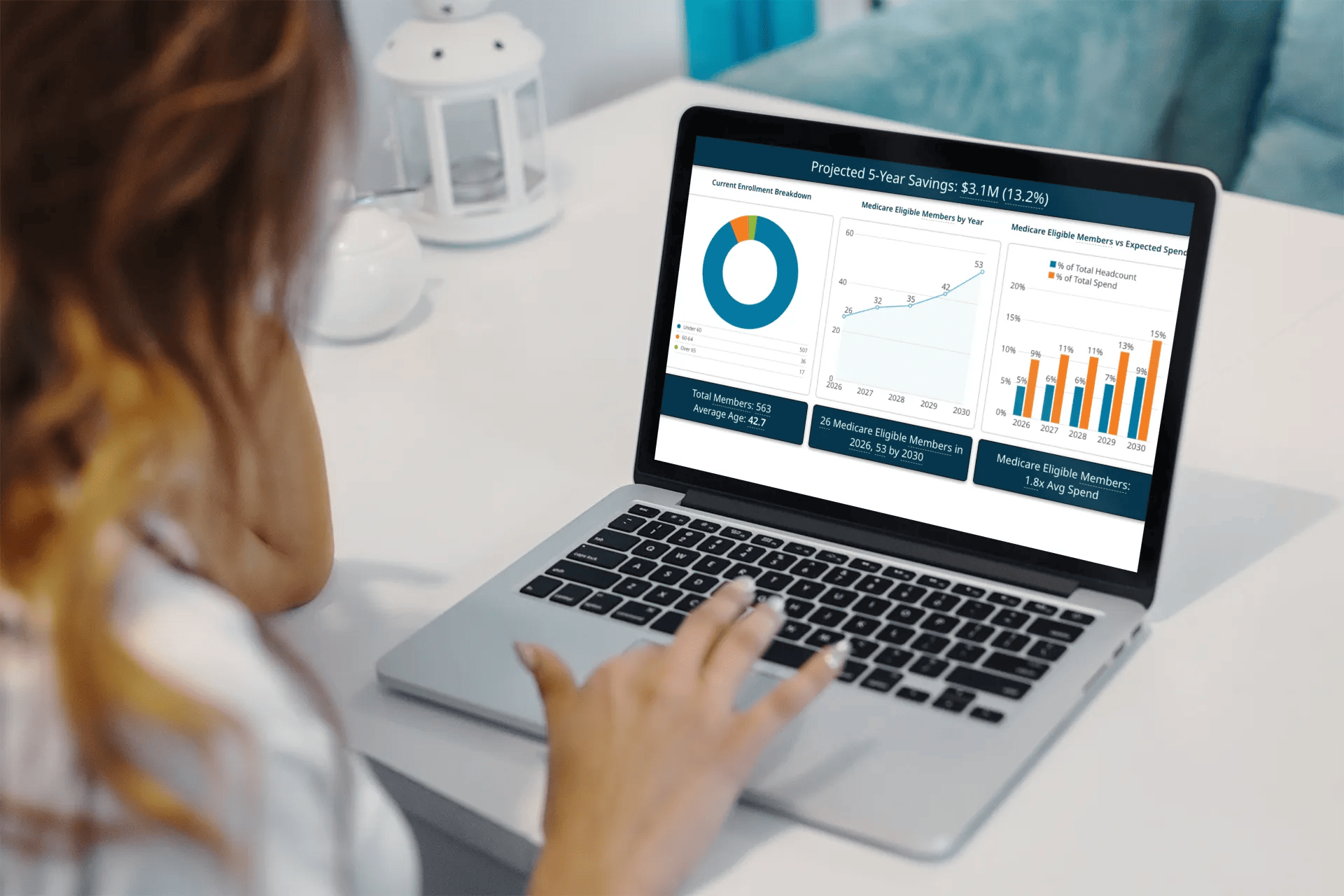
The AI in Impact Studio is doing the analytical work that would otherwise take a consultant hours to complete manually, and doing it continuously, not just at renewal time.
The core capabilities include: claim-level cost analysis, which identifies specifically what's driving a cost trend and suggests targeted interventions with projected impact; real-time scenario modeling, which projects the financial impact of a plan change dynamically rather than requiring a separate actuarial engagement; demographic-driven recommendations, which cross-reference workforce demographics with industry benchmarking to surface likely-fit benefit alternatives; predictive cost trajectories, which provide five-year projections across multiple scenarios using actuarial research and real market data; and connected cross-portfolio intelligence, which ensures a recommendation in one area doesn't inadvertently create a blind spot in another.
AI-generated summaries run throughout the platform as well, translating dense data into clear, plain-language takeaways that call out where the impact is and where the opportunity is — so a consultant doesn't have to dig through raw data to find the story it's telling.
The intent is straightforward: the AI handles the analysis so OneDigital consultants can focus on strategy and judgment, the parts that actually require human expertise.
OneDigital treats its AI Coworkers as talent, not tools. Each one is hired the way a person would be: a defined job description, a knowledge domain, an internship period where its output is stress-tested against real work, and an apprenticeship with a pilot group before it earns a permanent seat. DEX, OneDigital's AI sales coworker, went through exactly that process before launching company-wide to every producer — its pilot group reclaimed a combined ten months of time before the rollout scaled. Each coworker also reports to a human supervisor and carries a "salary," calculated as the token cost of running it, so leadership can evaluate it the same way they'd evaluate any new hire: is this worth what it costs?
AI is shifting benefits consulting from a once-a-year renewal exercise to a continuous, claim-level discipline. Instead of waiting for a broker to review costs annually, platforms like Impact Studio surface what's actually driving cost trends in real time and model the financial impact of plan changes before they're made. On the employee side, AI is also changing how people get answers to benefits questions in the first place — being available evenings and weekends, and giving employees a lower-pressure way to ask sensitive questions, frees up HR teams to focus on the conversations that genuinely need a human. The net effect: benefits strategy is becoming more precise and more responsive, rather than a once-a-year guess.
Workforce Intelligence is the operator's playbook for treating AI transformation as a people decision, not a tech one. It's a bestselling book written by OneDigital's Mike Sullivan and Vinay Gidwaney that details OneDigital's own AI journey and applies that model to how other companies can begin building an AI program inside their organization.
The Workforce Intelligence (WI) Score is a way to measure whether AI adoption is actually making a workforce more effective, not just busier. It pairs an organization's existing productivity metric with a measure of how collaboratively its people are actually using AI, so the two move together instead of being reported separately.
The score works by classifying AI use into tiers, from purely transactional, one-off question-and-answer use, to genuine collaboration, to full co-intelligence, where AI functions as a real partner inside the workflow — and calculating an "AI Amplification Factor" between 0 and 1 based on how a workforce's usage breaks down across those tiers. A rising score means an organization is getting smarter as it adopts AI; a flat score, even alongside heavy AI spend, means it's simply getting busier.
It can, when the AI is doing more than surface-level benchmarking. Tools like Impact Studio use claim-level analysis to identify specifically what's driving a client's cost trend, then suggest targeted interventions with a projected impact — rather than producing a generic report. Because the analysis runs continuously rather than once a year at renewal, employers get a live, ongoing view of where costs are trending and what to do about it, with five-year projections built on real market and actuarial data rather than a single point-in-time estimate.
AI is reshaping every workforce faster than most organizations have had time to prepare for, which is turning HR consulting into a more structured, advisory-driven practice. Rather than reacting to AI adoption after it's already happened informally, OneDigital's HR consulting team helps employers understand where they stand today and build the strategy, programs, and capabilities to lead what's next. The work spans both the human side of transformation, change management, culture, communication, and the business side, cost, compliance, and measurable outcomes, rather than treating AI as purely an IT initiative.
OneDigital's approach to AI has been recognized by outside media, business publications, and platform partners, including: